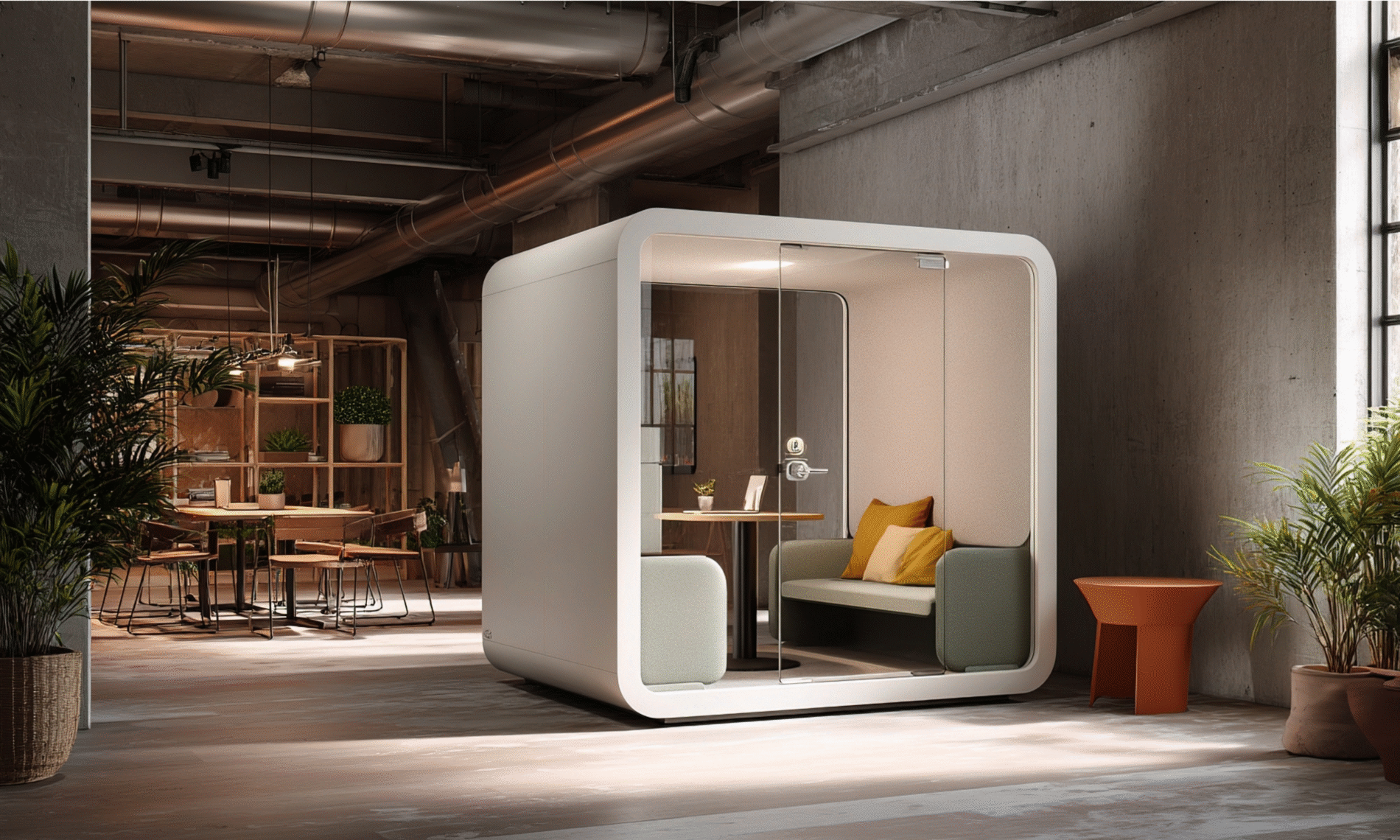
Acoustic booths, also known as office pods or acoustic office boxes, have become increasingly popular in recent years. The rising trend of working in open-plan office environments, alongside the need to offer employees privacy and suitable acoustic conditions, has made such cabins common in modern workplaces, universities, and public institutions. However, to fulfil their purpose-providing silence and comfort-these booths must be equipped not only with sound-absorbing materials but also with effectively designed ventilation.
Ventilation in acoustic booths is not just about thermal comfort; it is primarily a necessity for health, safety, and user efficiency. Small, enclosed spaces can quickly build up carbon dioxide (CO₂), humidity, and heat produced by users and electronic devices. Insufficient ventilation results in reduced concentration, lower well-being, and even psychological distress. This article explains the importance of ventilation in acoustic booths, the types of ventilation solutions (including fans), and the criteria for their selection.
Acoustic booths – market overview and types
The global acoustic booth market is growing at a rate of 7-10% annually. It is estimated to exceed USD 1 billion by 2030, covering office, educational, and public sectors. In Poland, the market is rapidly expanding, driven by the open-space trend in offices and coworking spaces.
Types of acoustic booths:
Phone booths – single-user, compact units for brief phone or video calls.
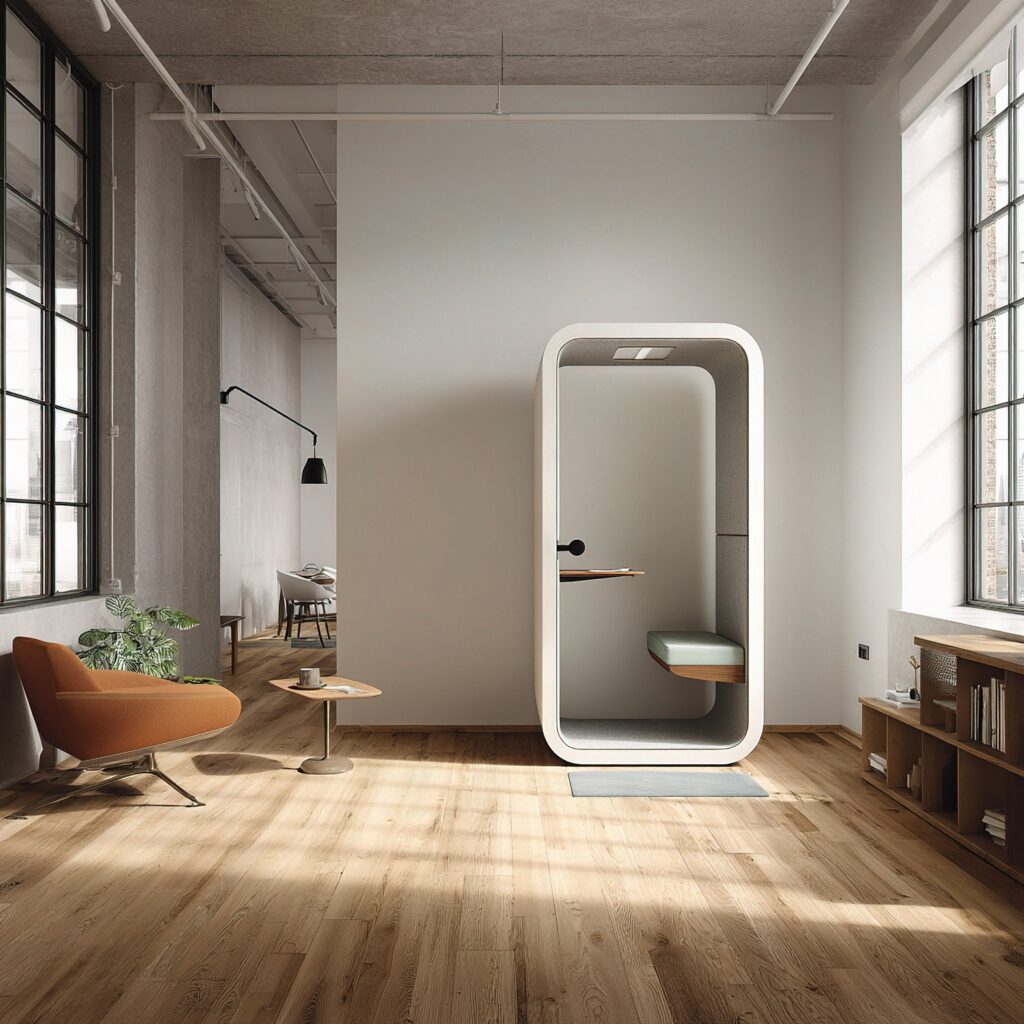
Work booths – slightly larger, with space for a laptop, chair, and table, allowing focused work.

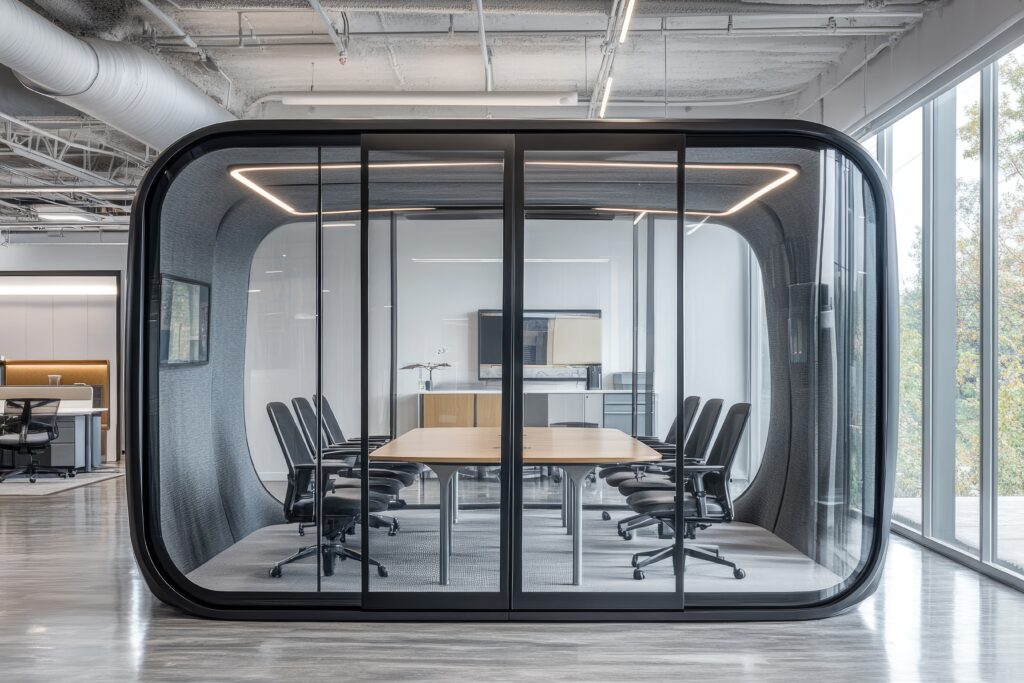
Conference booths – for 2-6 people, often used as mini meeting rooms.
Specialised booths – for audio recording, therapy sessions, or medical use (e.g., audiology).

Regardless of size or function, all booths share the goal of providing acoustic comfort while maintaining proper ventilation.
Why is ventilation critical in booths?
- Small volume and quick air depletion
A typical single-person booth has a volume of 1.5-3 m³; a two-person booth 3-6 m³. An adult consumes 20-30 litres of oxygen per hour and emits ~20 litres of CO₂. In a small, enclosed space, CO₂ levels can surpass 1,000 ppm after just a few minutes, leading to drowsiness and reduced concentration.
- Thermal comfort and humidity
An enclosed cabin heats up quickly, and heat sources include:
– the user themselves – it’s estimated that a person performing office work emits approximately 100-120 W of heat in the form of thermal radiation, convection, and evaporation,
– electronic devices, LED lighting, and sunlight entering through the glazing.
The lack of ventilation causes the temperature to rise by as much as 3-4°C in just 15 minutes.
- Hygiene requirements
The COVID-19 pandemic has underscored the importance of proper air exchange in small spaces. Ventilation reduces the risk of aerosol build-up and unwanted odours, which is especially crucial when the booth is used multiple times a day.
Standards and guidelines
In accordance with occupational health and safety recommendations and acoustic standards:
- the minimum air exchange rate should be 20-30 m³/h per person
- the permissible CO₂ concentration should not exceed 1000 ppm,
- the fan noise level should be lower than 35 dB(A) to avoid impairing the acoustic performance of the booth.
Ventilation solutions in acoustic booths
Gravity ventilation
This is the simplest form of ventilation, requiring no fans – it depends on pressure and temperature differences between the inside of the building and the outside environment. In the case of acoustic booths, because of their small size and placement within heated rooms, these differences are too minimal, rendering this type of ventilation ineffective.
Mechanical ventilation – fans
The most common solution used in acoustic booths is forced ventilation – using quiet axial or radial fans. This enables full control over the airflow and, when chosen correctly, does not affect sound insulation.
Types of fans used in acoustic booths:
- Axial fans – simple, thin, easy to mount in walls/ceilings, suitable for small booths (o (typical flow 20–50 m³/h).
- Centrifugal fans – Quieter, more efficient at higher pressure; enable the installation of acoustic channels and filters, ideal for larger booths.
- EC fans – Electronically commutated; energy-efficient, speed-controllable, quieter, and longer-lasting.
Designing ventilation in acoustic booths
Calculating ventilation requirements:
The basis for selecting a fan is determining the required airflow:
- Recommended: 20-30 m³/h per person.
- 1-person booth: min. 25 m³/h.
- 4-person booth: 80-100 m³/h.
In practice, it is advised to use a safety factor of 1.2–1.5 due to potential differences in booth sealing and use.
Acoustics and ventilation
The challenge lies in balancing sound insulation with ventilation. On one hand, we want a tight booth that effectively dampens sounds escaping from it, as well as those that might enter. On the other hand, proper ventilation must be maintained, which requires openings. Ventilation ducts are potential “acoustic bridges,” so the following measures are used:
- acoustic silencers in the ducts,
- labyrinth valves with a sound wave-damping shape,
- quiet fans (<35 dB(A))
Air filtration
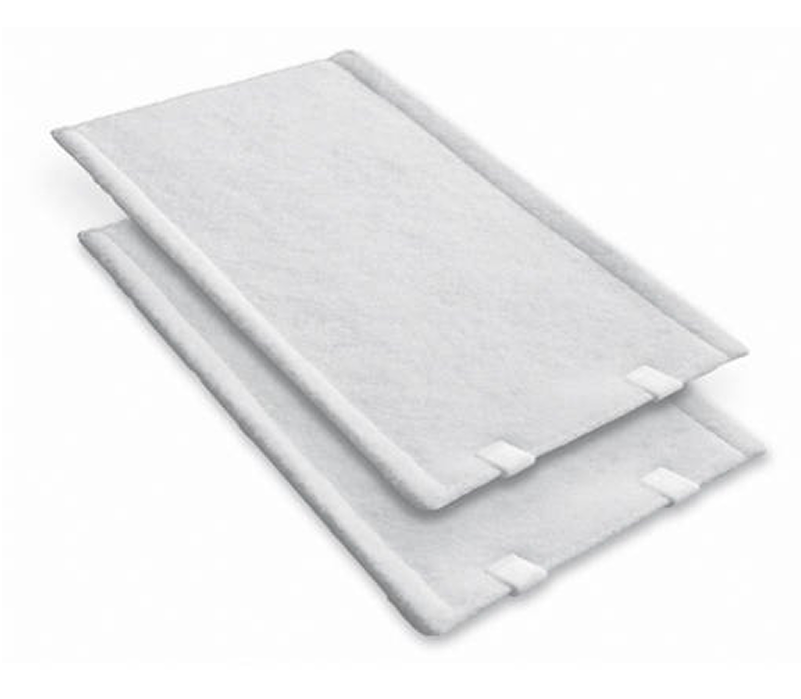
Modern booths use pre-filters (G3-G4) or activated carbon filters, primarily when the booth is located in public spaces.
Ventilation controls
Popular solutions:
- Occupancy sensors – the fan turns on automatically only when the booth is in use.
- CO2/temperature sensors – automatic fan speed adjustment based on CO2 levels or temperature measurements.
- Manual control – the user independently regulates ventilation intensity. This solution is less expensive, but its drawback is the risk of fans being left on, leading to unnecessary energy consumption.
Fan selection criteria for an acoustic booth?
- Airflow
- Min. 25 m³/h (1-person),
- Min. 80 m³/h (4-person).
- Noise level
- No more than 30-35 dB(A) at a distance of 1 m from the outlet.
- It is recommended to choose fans with acoustically profiled blades.
- Fan pressure
- For booths with longer ducts and filters, radial fans are required (higher pressure, e.g., 100-200 Pa).
- Energy efficiency
- EC motors, <15 W for small booths, <30 W for larger ones.
- Durability and maintenance
- Ball bearings, min. 40,000 operating hours.
- Easy access for cleaning filters.
- Safety and certifications
- CE, RoHS, and compliance with fire safety standards.
Integration of ventilation with the structure of the acoustic booth
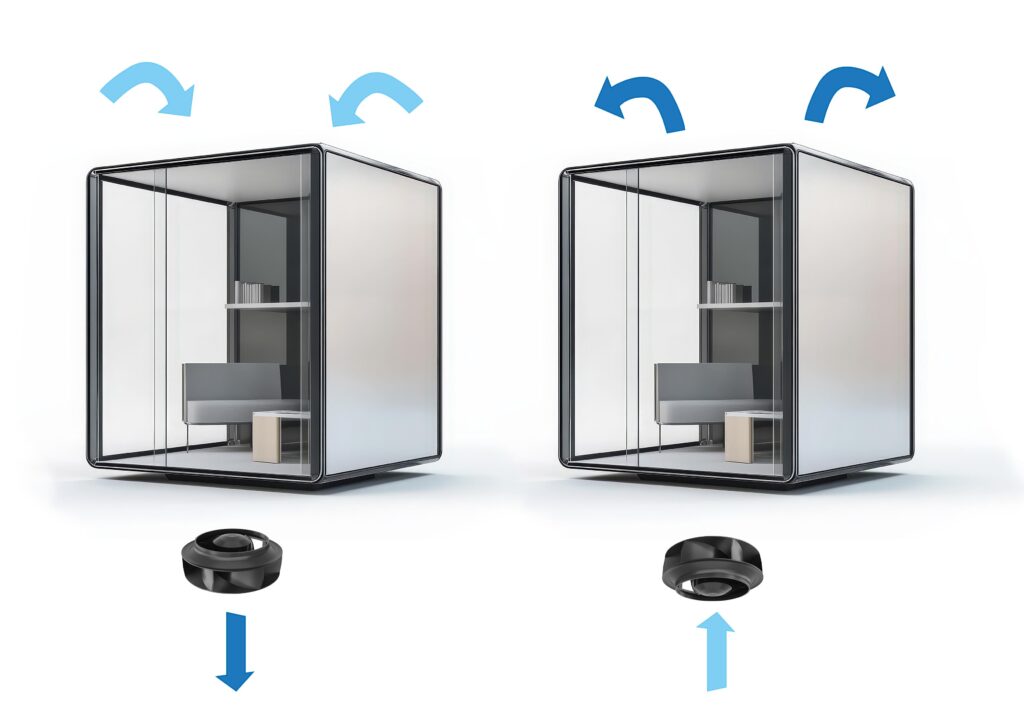
The placement of the fan, silencers, and air inlets and outlets depends on several factors, such as the cabin’s design, intended use, and installation method. Usually, the ventilation system is situated on the roof, although floor-mounted fan options are becoming more common. Both choices have their own advantages and limitations.
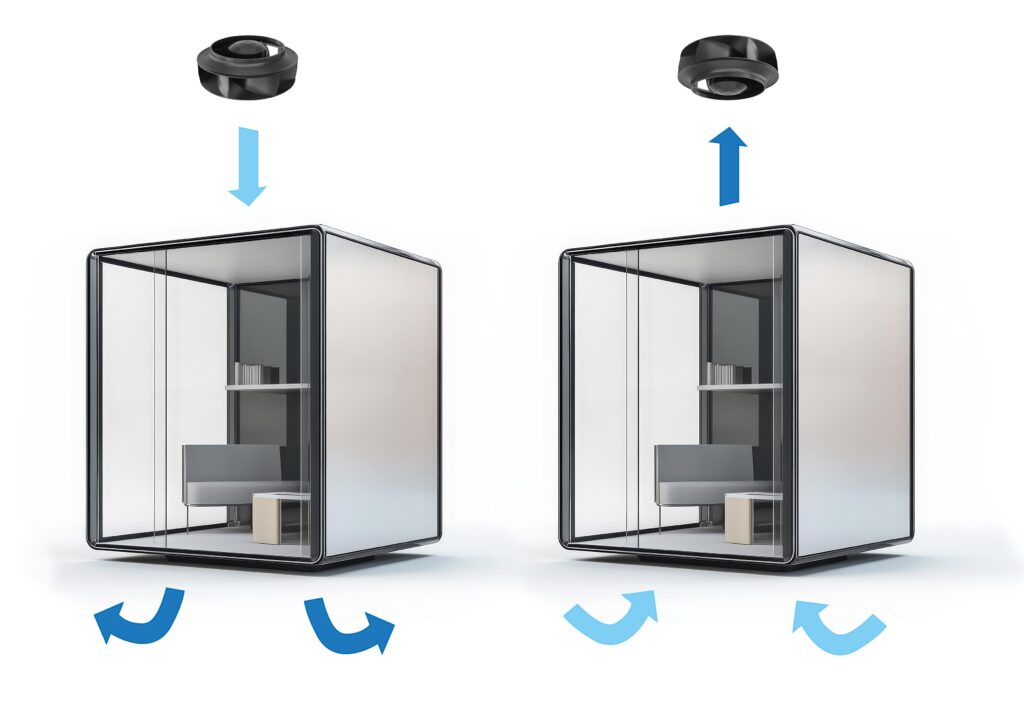
| Location | Air Intake | Exhaust | Advantages | Disadvantages |
| Ceiling | From top | Out bottom | – simple design and installation, – natural air circulation, – no heat accumulation under the ceiling | – uncomfortable airflow onto the head (draft) and the need to disperse it, – increased noise (fan is close to the head) |
| From bottom | Out top | – stable thermal comfort – reduced risk of drafts on the face | – feeling of cold feet, – more difficult installation of the floor vent, – increased noise (the fan is close to the head), – risk of sucking dust from the floor | |
| Floor | From top | Out bottom | – less audible fan (located further away from the head) – predictable airflow – reduced risk of drafts | – higher installation costs (underfloor ducts) – more difficult fan servicing – limited technical space |
| From bottom | Out top | – very effective ventilation – natural air movement from bottom to top – high thermal comfort – no draft on the face – less audible fan (located further away from the head) | – risk of cold feet – more difficult installation – limited service access |
In summary:
- A roof fan is easier to install and service, but carries a greater risk of drafts and increased noise.
- An underfloor fan improves acoustic comfort and reduces the perception of direct airflow, but is more complex to install and maintain.
Fan noise attenuation
- Use flexible ducting, duct silencers, and rubber mounts.
- Install the fan in a separate, sound-insulated chamber.
Power and automation
- 12-24 V DC typically powers fans for safety reasons.
- Can be integrated with a lighting system – the fan turns on when the light is on.
Conclusion
Ventilation in acoustic booths is a fundamental component – not an optional feature. A well-designed ventilation system:
- Maintains low CO₂ concentration and provides fresh air.
- Stabilises temperature and humidity inside the booth.
- Does not compromise sound insulation or acoustic comfort.
- Operates quietly, energy-efficiently, and reliably.
Author: Grzegorz Perestaj, Regional Sales Director, AFL MOTORS
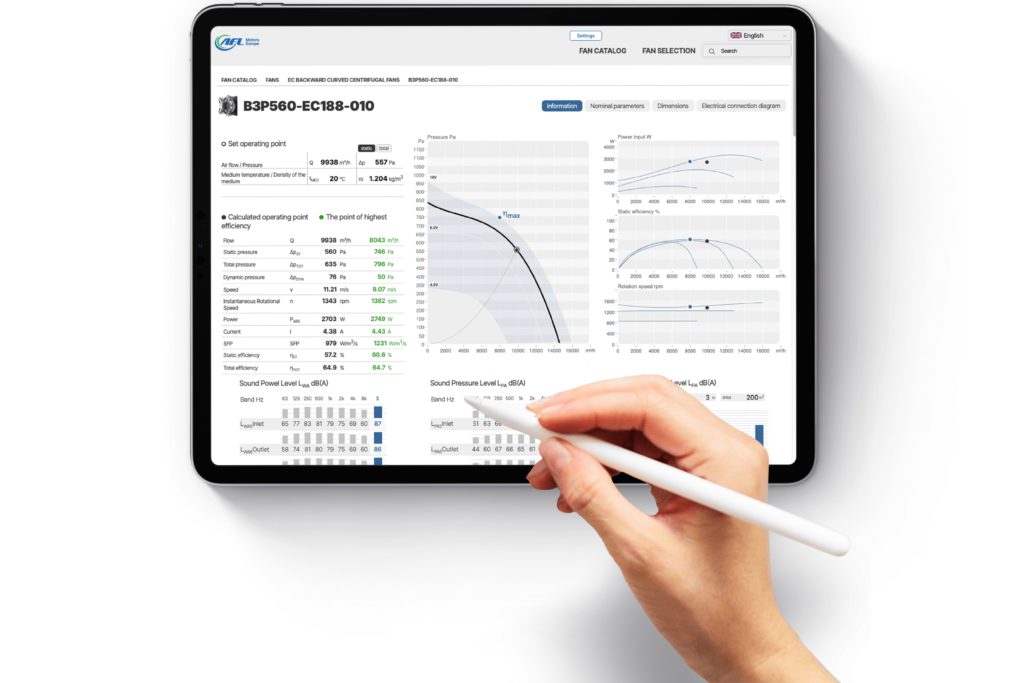
Suggested fan model
Based on the solutions discussed, we recommend this model B3P133-EC072-101