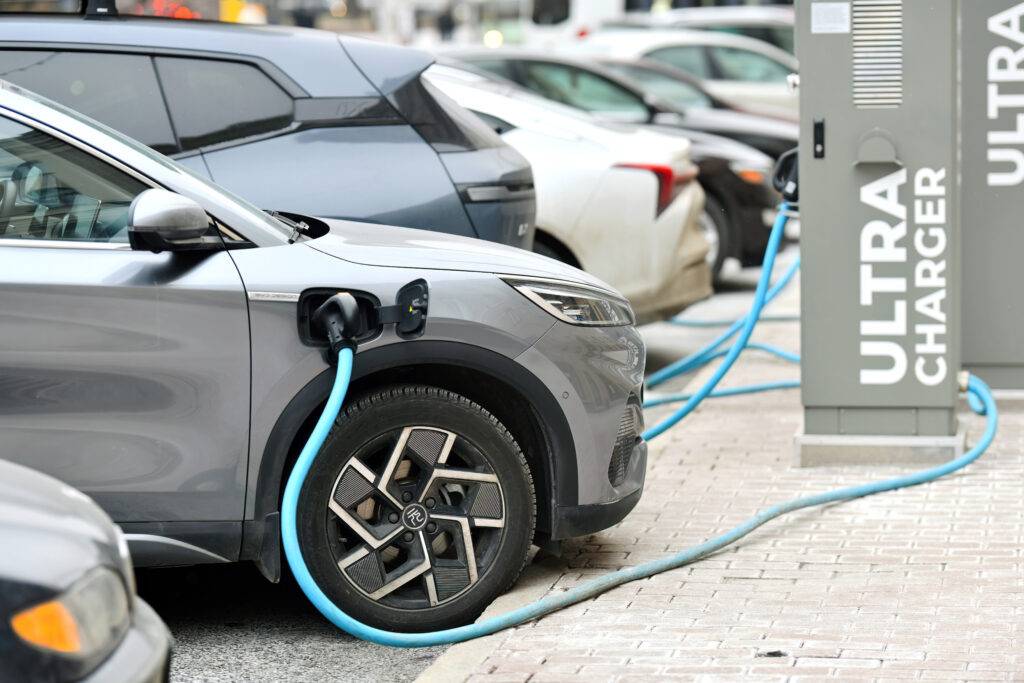
The electromobility market is expanding rapidly. Charging infrastructure has evolved from basic AC chargers to fast DC systems, and now to ultra-fast stations with power outputs of 150 kW, 350 kW, and more. This progress leads to shorter charging times for users. For charger manufacturers, it introduces new challenges, especially in thermal management.
As power increases, energy density increases, and consequently, the amount of heat generated. This means that cooling is no longer an add-on to the design, but rather a key element. Without effective thermal management, even the best-designed electronics cannot operate stably.
In this context, fans stop being just components and start playing a vital role as system elements. Modern axial fans from AFL MOTORS address these challenges by providing solutions tailored to the real-world operating conditions of EV infrastructure.
Why cooling is critical
The relationship between charging power and heat generation is direct and unavoidable. A 22 kW AC charger produces heat losses of several hundred watts. At 150 kW, it’s about several kilowatts, and at 350 kW, the heat generated exceeds 10 kW.
This amount of thermal energy must be continuously and effectively dissipated. Otherwise, the system starts to reduce its efficiency (throttling), which increases charging times. In extreme cases, component failure occurs and the station shuts down completely.
Key power electronics components, like IGBT modules, rectifiers, and transformers, are highly sensitive to temperature. Excessive heating directly affects the lifespan and safety of the entire system.
From the infrastructure operator’s perspective, the issue also has a business aspect. Each failure not only results in service costs but, more importantly, leads to lost revenue and user dissatisfaction. In the case of highway stations, this presents a real risk of charging point disruptions.
Real-world operating conditions involve more than temperature
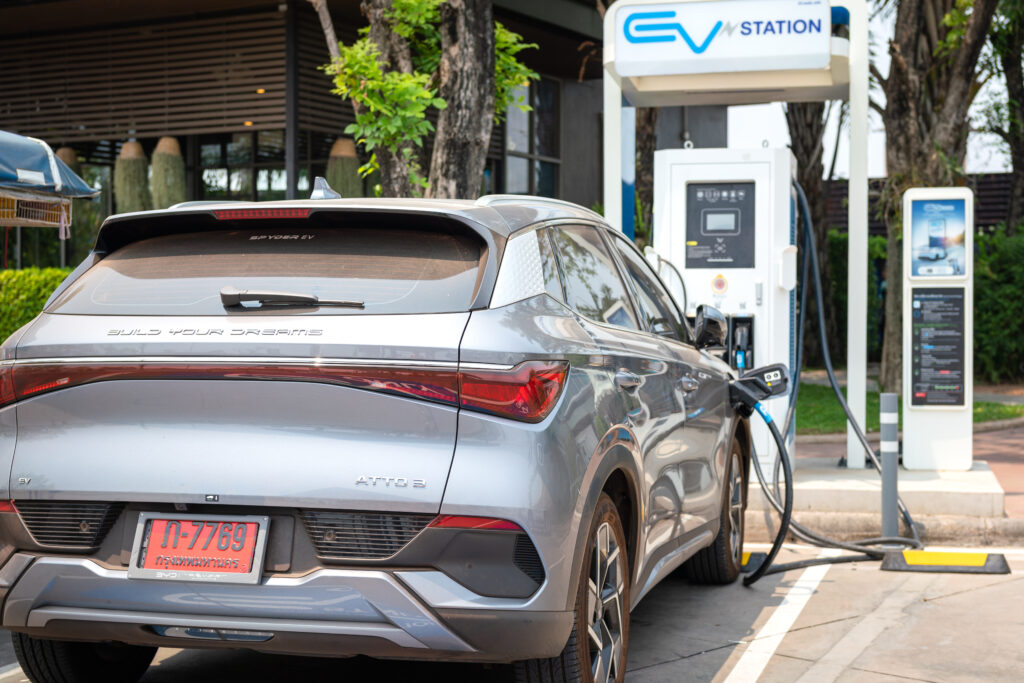
EV charger cooling systems operate in harsh outdoor environments, which greatly affects their reliability.
Key environmental challenges:
• Rain, dust, and high humidity
• Salty air (e.g., coastal locations, winter roads)
• Wide temperature range: -30°C to +50°C
• Strong sunlight exposure (raising housing temperature by up to +15°C -25°C)
• Organic contaminants (dust, insects)
Under these conditions, the cooling system must comply with standards for both industrial and consumer use.
Key requirements for a cooling system
Effective cooling of an EV charger must meet several requirements. One of the most important is the IP rating. In standard outdoor installations, IP67 is sufficient, but in more challenging environments, IP68 is increasingly necessary, ensuring full water resistance and long-term immersion.
High static pressure is equally crucial, especially in compact enclosures where airflow faces substantial resistance. Without it, even high airflow fails to provide effective cooling.
The system must also sustain operational stability at high temperatures, provide long-term reliability, and operate maintenance-free for years. Integration with the device architecture for both AC and DC systems is also essential, along with communication capabilities such as RS485, which enables intelligent fan control.
Energy efficiency is also crucial. The cooling system should not significantly raise the station’s total energy consumption.
AFL MOTORS fans as an effective Cooling solution
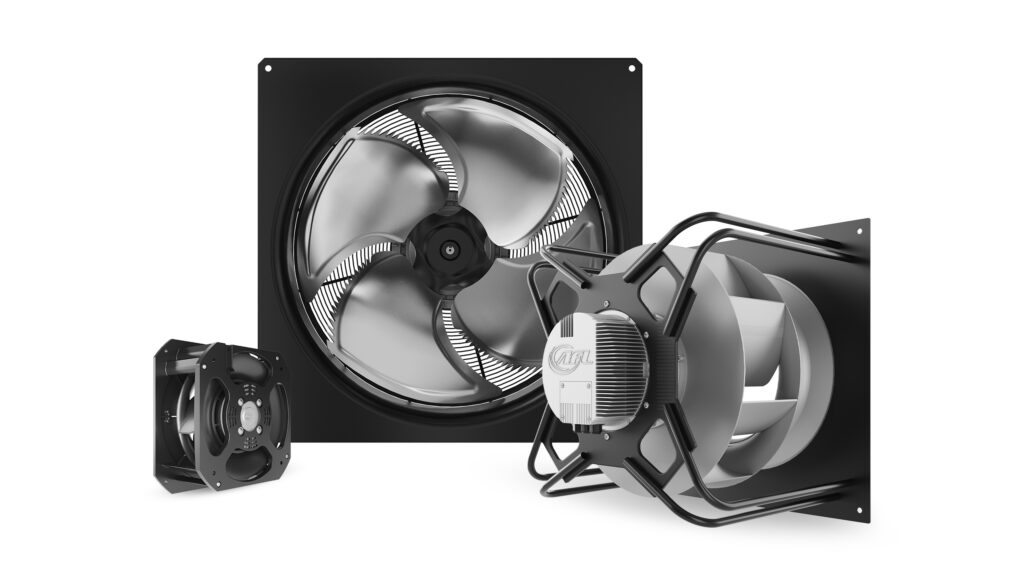
In this context, the fan goes from being a minor detail to a crucial part of the entire system. AFL MOTORS designs its fans with this responsibility in mind.
One key differentiator is the use of BMC (Bulk Molding Compound) material, which offers high resistance to water, UV radiation, and corrosion. Combined with the enclosed motor design, this enables high IP67 and even IP68 sealing levels without needing additional seals.
AFL offers a broad range of voltage platforms, from easy-to-integrate AC 220V fans to DC 48V solutions and other variants used in DC bus-based systems. This enables customization for nearly any charger architecture. Additional benefits include intelligent control, speed regulation, and RS485 communication, which allows for dynamic adjustment of fan operation based on current thermal conditions. This results in greater efficiency and longer system life.
Case Study: AFL MOTORS & BYD Auto collaboration
The strongest proof of AFL MOTORS industrial fans effectiveness is shown through real-world applications. One example is our partnership with BYD Auto, a global leader in electromobility.
The BYD Ultra Fast Charger stations, which use liquid cooling, employ the A3P500-EC137-257 fan. This large-diameter axial fan delivers an airflow of 6000 m³/h at 150 Pa of pressure.
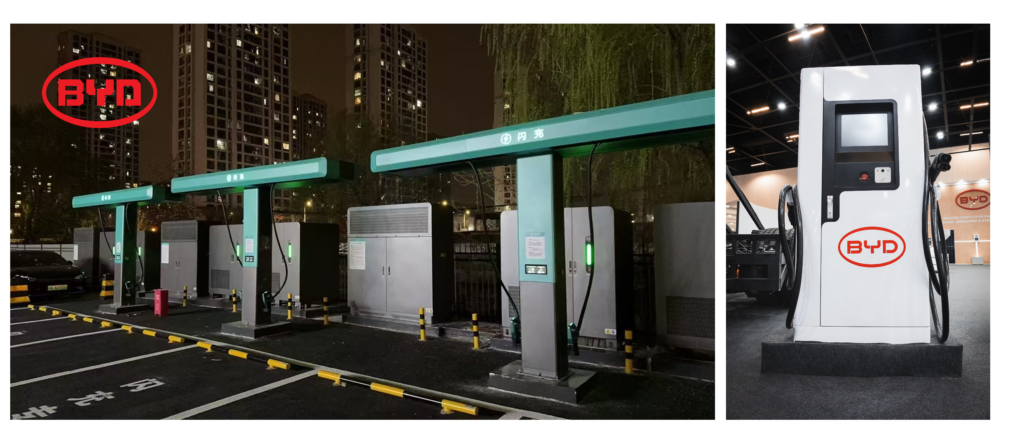
In these systems, the fan works alongside rather than replaces liquid cooling. It helps dissipate heat from auxiliary circuits and keep the overall system temperature stable. This shows how two cooling methods, air and liquid, are integrated into a single, unified solution.
The use of a proven fan design, also employed in energy systems, confirms its long-term reliability. This collaboration with BYD shows that AFL fans meet the standards of the world’s most advanced charging systems.
Summary
AFL MOTORS, leveraging experience and partnerships with industry leaders like BYD, delivers solutions that address the actual needs of modern charging systems.
Industrial fans are essential in this process; their quality, durability, and operating conditions directly influence the efficiency and availability of charging stations. As power demands increase and operating environments become more challenging, reliable, well-designed cooling systems become even more crucial, laying the groundwork for the stable operation of the entire EV infrastructure.